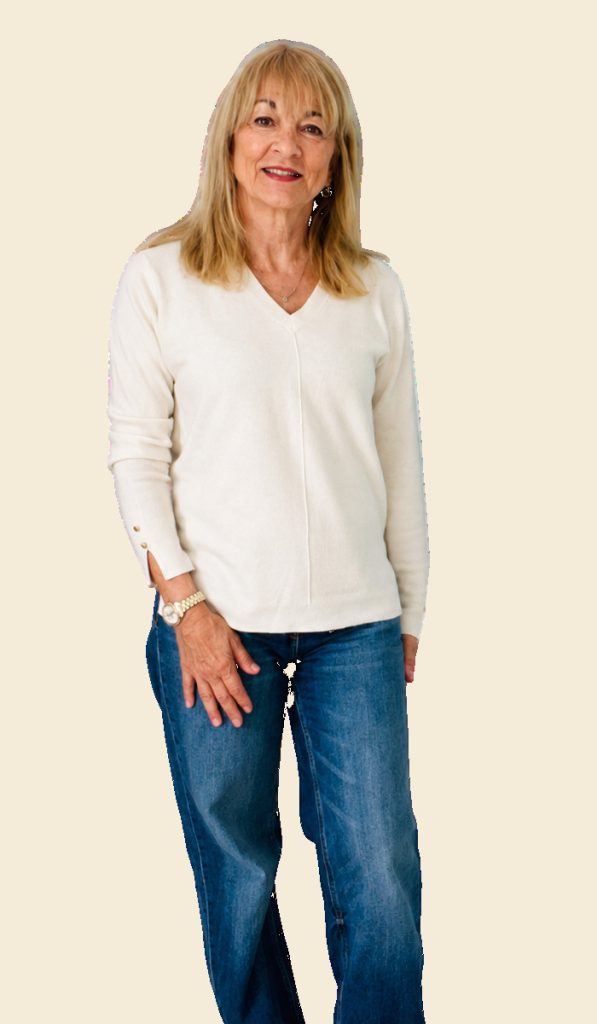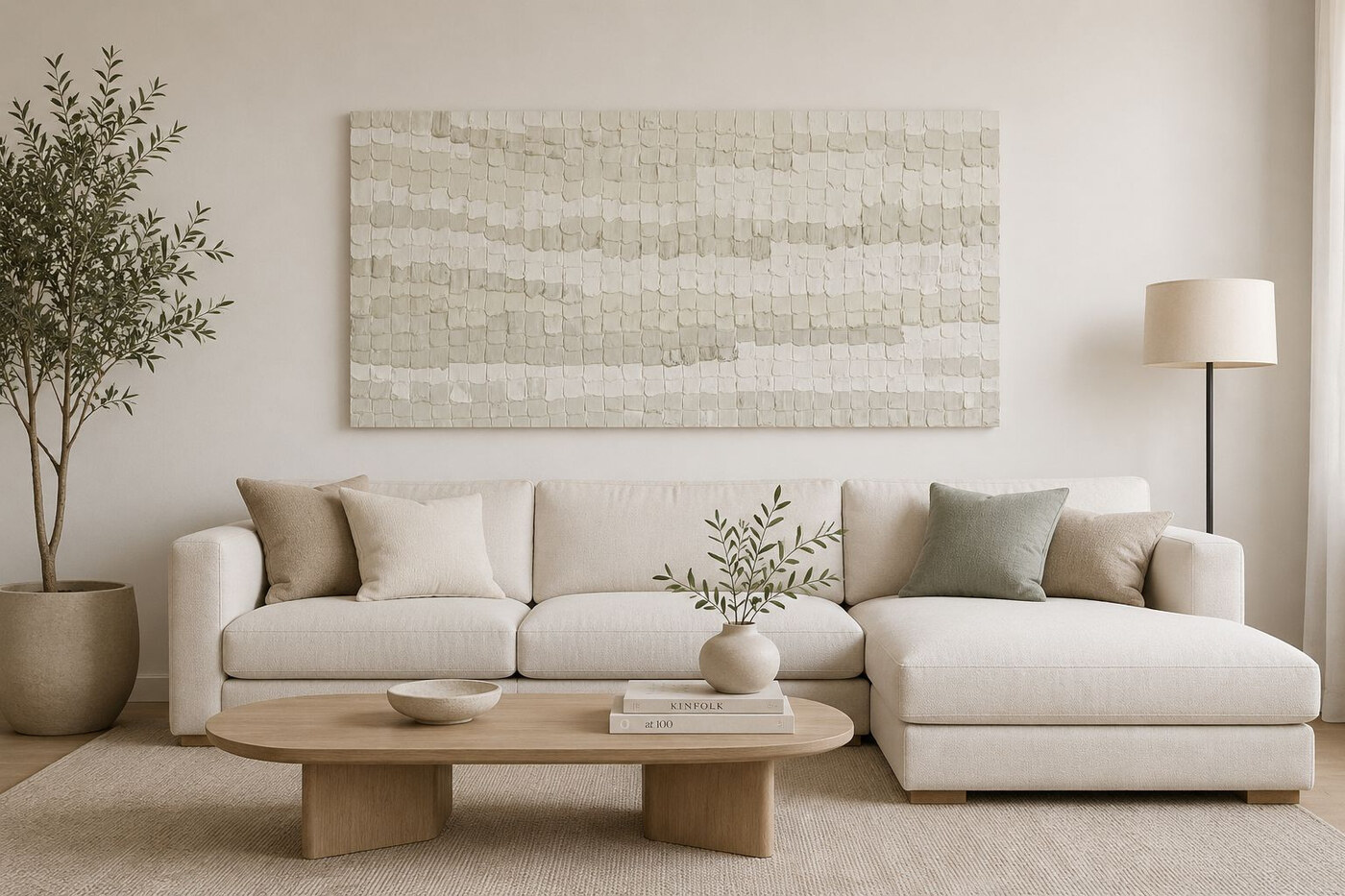
Textured wall paintings ask to be looked at twice: once from across the room, and once up close, when you notice the ridges, the cracks and the soft hollows in the surface. In her Mediterranean Collection 2026, Spanish artist Adriana Fernández builds each canvas by hand, layer by layer, so the relief is not a finish added on top but the substance of the artwork itself.
This page explains what makes handmade textured art different, how the surface behaves with light, where it works best in a home and how to choose the right piece with confidence, all in English.
What makes a relief painting feel different
A flat painting is read with the eyes. A relief painting is also read with the light. Because the surface has real volume, every raised edge throws a small shadow and every hollow holds a little darkness. The result is a piece that seems almost sculptural without leaving the canvas, and that can bring depth to a room in a way flat colour alone cannot.
That physical quality is what people mean by tactile art: you feel the urge to touch it, even when you do not. It gives a room something calm and grounded, closer to stone, sand, nature and old plaster art than to a decorative object.
Handmade texture versus industrial finishes
Much of what is sold as textured abstract art is produced in series: the same 3D textured pattern pressed or sprayed onto hundreds of canvases. It can look tidy, but it is predictable, and up close it lacks life. A hand painted surface is different in three ways:
- It is unrepeatable. Each layer reacts to the one beneath it, so no two areas, and no two works, are the same.
- It has real history. You can read the order in which the matter was laid, scraped back and covered again.
- It ages well. A piece built with care becomes more interesting the longer you live with it.
The materials behind the relief
Adriana works with acrylic, textures built up with matter (impasto), relief, bitumen of Judea and asphalt paint. The matter creates the volume, sometimes with a plaster-like texture, sometimes rough like weathered rock. Bitumen of Judea and asphalt paint bring warm, earthy shadows that settle into the hollows and make the relief stand out. Acrylic carries the colour, from soft beige to deep Mediterranean blue.
Raking light: a painting that changes through the day
Relief really comes alive with raking light, the light that falls across a surface at a low angle. In the morning, a window to one side can make every ridge sharp and graphic. At midday, with light from above, the piece softens and the colour leads. In the evening, under a lamp, the bitumen tones glow and the shadows grow long.
So when you hang a piece like this, think about where the light comes from. A wall beside a window, or a picture light angled from above, will show the relief at its best. Flat, frontal light is the one thing that flattens it.
Textured abstract art in the Mediterranean Collection 2026
All pieces are originals on canvas, signed and delivered with a certificate of authenticity. These are the works where the surface leads:
- Materia Serena, 140×70 cm. Paint and calm organic textures in neutral tones; the quietest piece of the collection.
- Horizonte en Calma, 120×90 cm. Acrylic, matter and bitumen of Judea, with a warm, earthy surface.
- Límites and Horizontes, 130×75 cm each. Paint, texture and asphalt paint; they work alone or side by side.
- Límite Natural, 120×80 cm. Paint, texture and asphalt paint: the edge between land and water seen from above.
- Equilibrio en Pétalos, 120×80 cm. Paint and texture inspired by coastal erosion.
- Mareas Serenas, set of 30×30 cm square pieces. Textured relief and acrylic for smaller spaces.
- Equilibrio, diptych, 60×50 cm each. A set of 2 canvases that share one rhythm.
For the biggest walls, see our large abstract paintings.
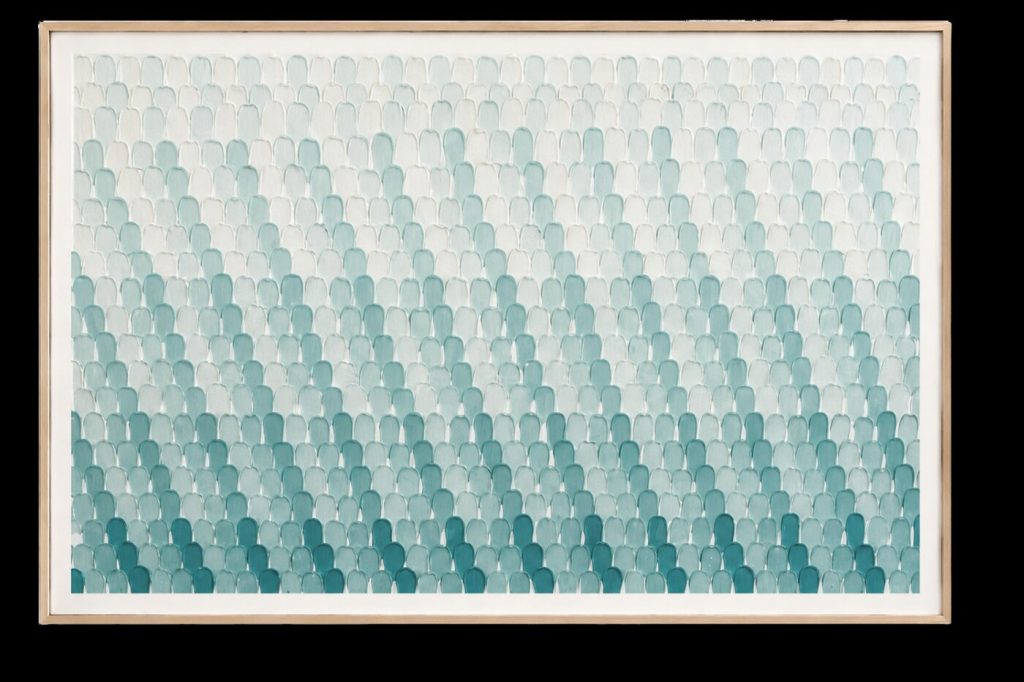 Equilibrio en Pétalos120 × 80 cmPaint and texture on canvasPrice on requestAsk about this piece →
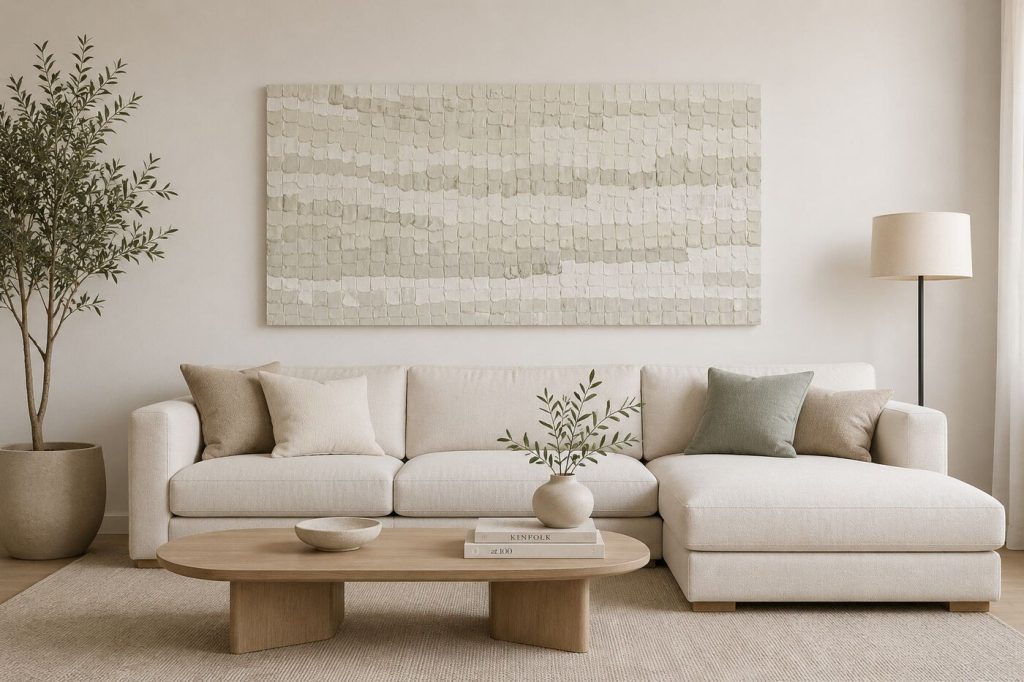 Materia Serena140 × 70 cmPaint and texture on canvasPrice on requestAsk about this piece →
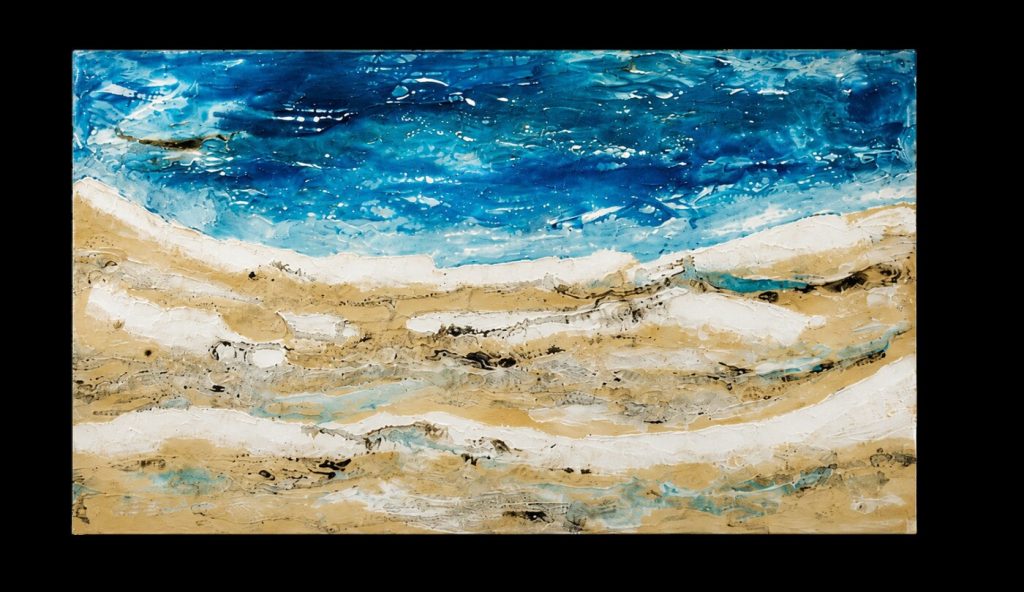 Límites130 × 75 cmPaint, texture and asphalt paint on canvasPrice on requestAsk about this piece →
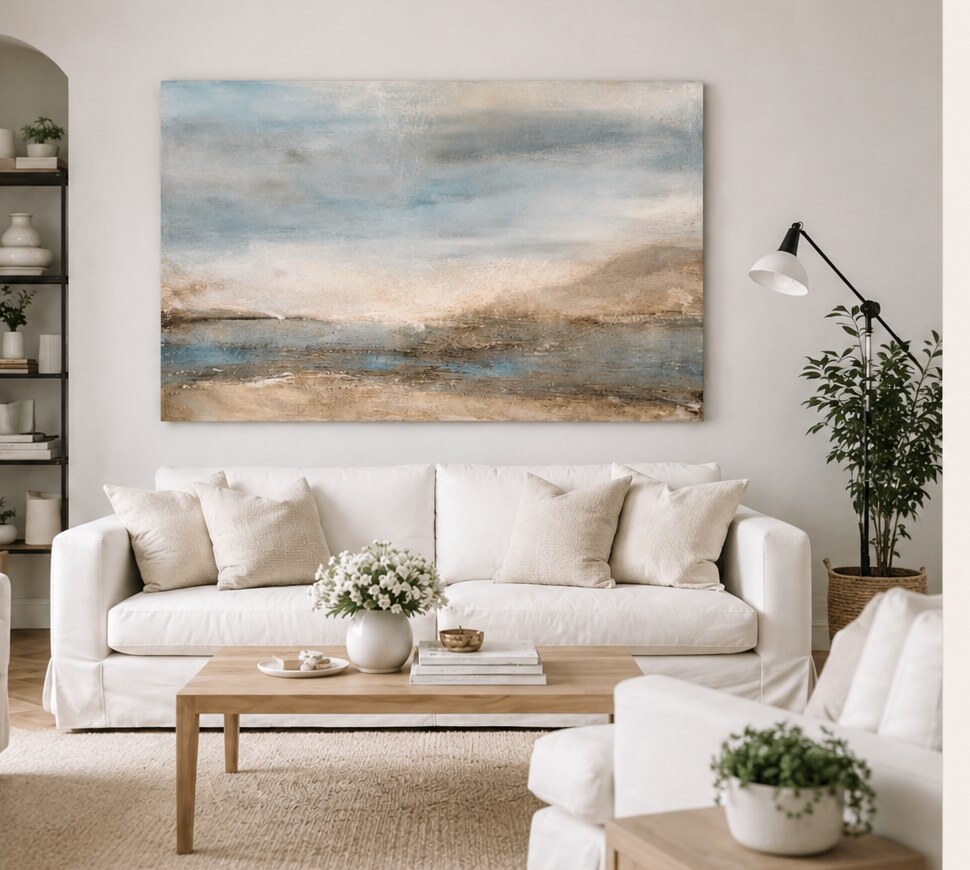 Horizonte en Calma120 × 90 cmAcrylic, textured matter and bitumen of JudeaPrice on requestAsk about this piece →
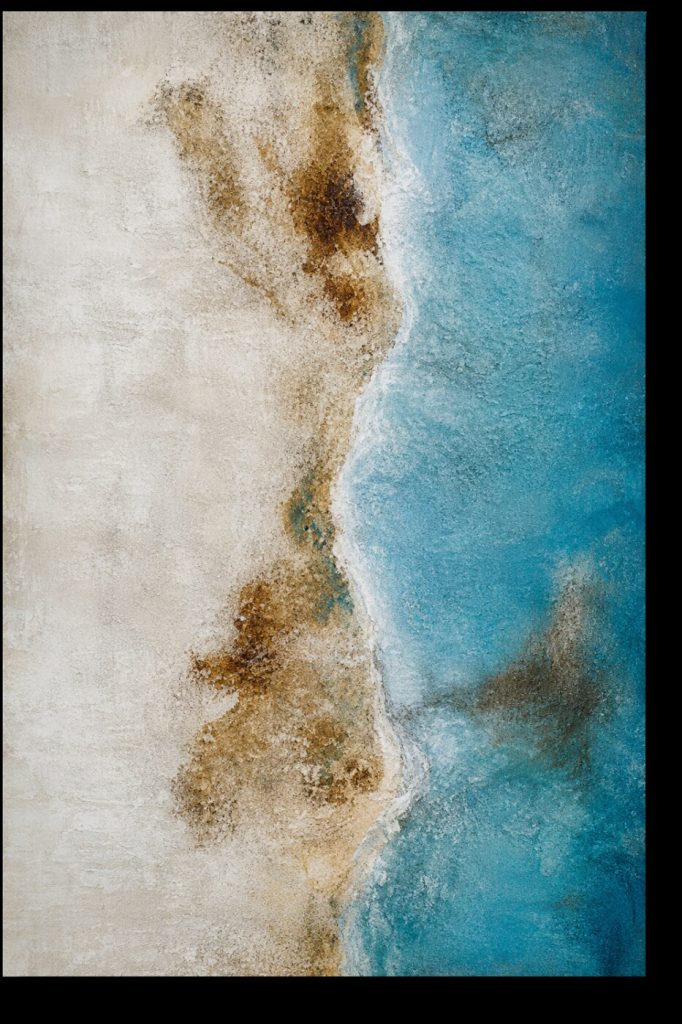 Límite Natural120 × 80 cmPaint, texture and asphalt paint on canvasPrice on requestAsk about this piece →
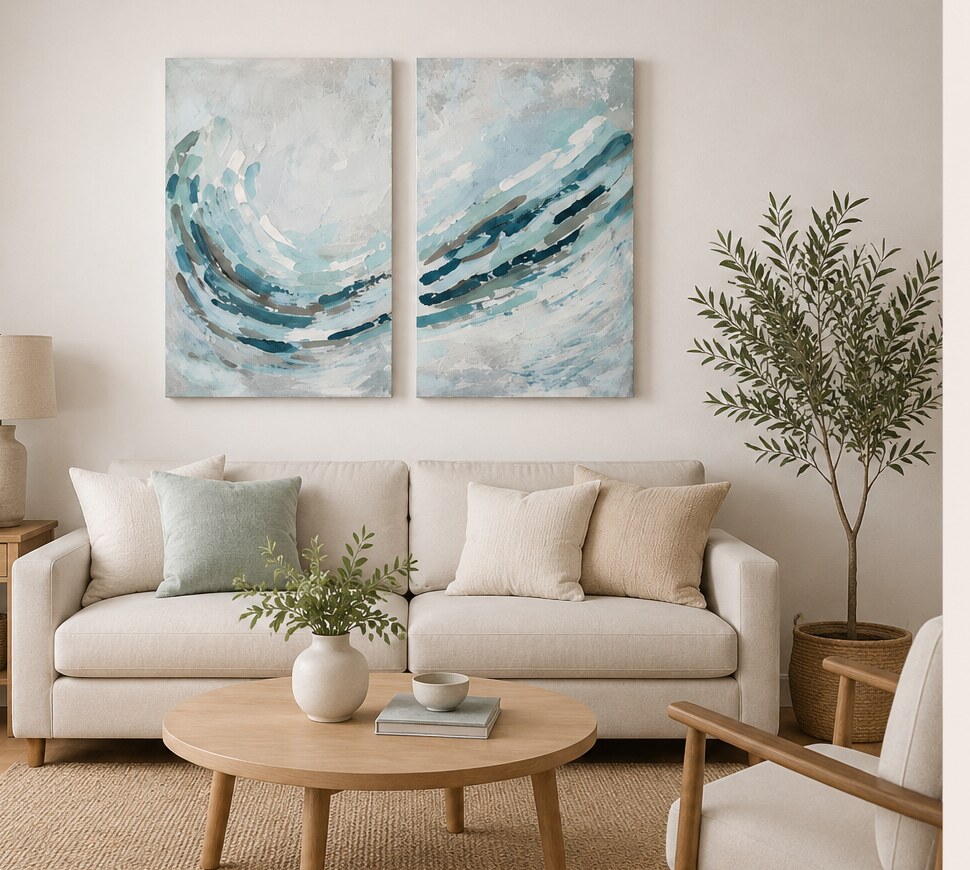 Equilibrio en MovimientoDiptych 50 × 70 cm eachPaint and texture on canvasPrice on requestAsk about this piece →
Where textured art works best: living room, bedroom, entrance
- Living room. Above a sofa or a console, a generous piece gives the room an anchor. As a guide, aim for around two-thirds of the sofa’s width.
- Headboard. A long, horizontal piece above the bed brings calm without visual noise, especially in neutral tones.
- Entrance or hallway. Here people pass close by, so the relief is noticed at once. A diptych or a smaller square set fits narrow spaces well.
Textured pieces suit minimalist, modern and wabi sabi interiors in particular, where natural materials, imperfection and quiet surfaces already set the tone. Wabi sabi wall art and handmade relief share the same idea: beauty in what is irregular, worn and real.
Neutral textured art or Mediterranean blues
Neutral textured art, in sand, beige, bone and warm grey, blends into the architecture and lets the relief do the talking. It is the safe, elegant choice for modern living spaces full of linen, pale wood and stone, and it pairs naturally with lime plaster or microcement.
Pieces with Mediterranean blues add a cool, deep note and a sense of horizon. Like a slow wave of colour, they work beautifully against off-white walls and bring a little of the coast indoors; you can see more of them among our sea paintings. If you are unsure, start from the room: warm, north-facing spaces usually welcome neutrals, while bright rooms can carry stronger blues.
Basic care
- Dust gently with a soft, dry brush; never use water or cleaning products.
- Avoid hanging the piece in direct, prolonged sunlight or right above a heat source.
- Keep it away from damp walls and steamy bathrooms without ventilation.
- When moving it, hold it by the stretcher and never press on the textured face. Every piece arrives stretched on its frame, ready to hang.
Choose with a simulation on your own wall
Relief is hard to judge on a screen, scale even harder, and you cannot touch a photo. That is why Adriana gives you free personal advice: you send a photo of your wall and she looks at the light, the tones, the furniture and the scale. Then she prepares a realistic simulation of the piece in your space so you can see it before you decide. You can ask for your free wall simulation here.
If you need a particular size or palette, she also paints commissions with the same techniques, so you can curate a room around one piece. You deal directly with the artist, with no middlemen, in English by WhatsApp or email, with a personal reply within 24 hours and delivery across Spain with professional packaging. Start through the commission and simulation form, or see the whole collection, including art for homes in Ibiza and Mallorca.