Impasto painting is what happens when paint stops being a thin skin of colour and becomes a body: thick, raised, sculpted. Push that idea further, so that the material itself carries the meaning, and you arrive at matter painting. Both are about texture you can almost touch, and about surfaces that change with the light. Here is what the technique is, where it comes from, how it is built, and how it lives in a home.
What is impasto?
Impasto (from the Italian for “paste” or “dough”) is a painting technique in which paint is laid on thickly, so that brushstrokes or knife marks stand up from the canvas. The thick application of paint creates a three-dimensional surface that catches light and shadow, adding texture and dimension that a flat, smooth finish never has. It is expressive by nature, with a real emotional impact: you can read the speed and direction of each gesture in the paint itself.
From Titian and Rembrandt to Van Gogh
The technique is old. Titian built up his late canvases with loaded brushwork, and Rembrandt used impasto in the Baroque period to make highlights, jewellery and skin glow. The most famous artists associated with it today are probably Vincent van Gogh, whose swirling, heavily loaded strokes are almost sculptural, and, in the twentieth century, the abstract painters who made texture their subject. Rembrandt and Van Gogh both worked in oil paint, the traditional medium for impasto oil painting.
Matter painting: when the material becomes the work
Matter painting (in Spanish, pintura matérica) takes impasto a step further. Instead of relief coming from the brushstroke alone, the artist deliberately builds a surface of matter, mixing paint with pastes and other materials, sometimes incorporating fabric or collage. It emerged in Europe after the Second World War within Art Informel, with Jean Fautrier and Jean Dubuffet in France, Alberto Burri in Italy and, in Spain, Antoni Tàpies and Manolo Millares. In matter painting, the surface is the message.
How an impasto painting is built: palette knife, layers and patience
This is not a step-by-step tutorial, but understanding the process helps you see why an original textured work looks the way it does:
- A firm support. A well-stretched canvas on a wooden stretcher that can carry the weight of the paint.
- Body. Artists build up layers of paint, often thickened with an impasto medium or texture paste, using a palette knife or a stiff brush. Palette knife painting gives crisp ridges; a brush leaves softer, rounder marks.
- Gesture. The surface is dragged, combed, scraped or carved while it is still workable.
- Patience. You allow each layer to dry before adding the next, otherwise thick layers crack in ways the artist did not choose.
- Glazes. Over the dry relief, thin transparent colour settles into the hollows and lights up every ridge.
Oil paint or acrylic paint for impasto?
Oil paint gives the classic, buttery impasto, but very thick layers can take weeks or months to dry. Acrylic paint dries far faster and, combined with heavy body formulas and texture mediums, can hold dramatic relief, which is why so much contemporary impasto art is done this way. Watercolour or pastel, by contrast, have no body to build with.
Why raking light matters: this can’t be photographed
A photo flattens texture. Raking light, the low light of early morning or late afternoon coming in from the side, does the opposite: it throws tiny shadows from every ridge and reveals a different surface from the one you saw at midday. A real impasto work changes with the hour, the season and the lamp you switch on at night. A synthetic relief finish repeats the same shadow forever and, up close, gives itself away as flat. That tactile, shifting quality is the whole point of textured art.
Matter and impasto in Adriana Fernández’s work
Adriana Fernández is a Spanish contemporary artist who paints in her studio in Ibiza town. Her language is abstract and organic: colour, texture and movement as vehicles of calm, inspired by the Mediterranean, its light and its silence. In the Mediterranean Collection 2026 the texture is built with acrylic paint, matter, relief and, in some pieces, asphalt paint, which brings a deep tone and a denser surface.
- Materia Serena (140×70 cm): calm organic textures in neutral tones.
- Silencio de Horizonte (160×80 cm): textures with acrylic glazes that hold the Mediterranean light.
- Límites and Horizontes (130×75 cm) and Límite Natural (120×80 cm): paint, texture and asphalt paint.
- Horizonte en Calma (120×90 cm): acrylic and matter.
- Mareas Serenas (set of 30×30 cm): textured relief and acrylic.
This is not the torn, dramatic matter of the post-war years. It is a quieter surface that speaks of coastal erosion, stone and the horizon, but it keeps the core idea of matter painting: a work you touch with your eyes. For the available pieces, see textured paintings with relief.
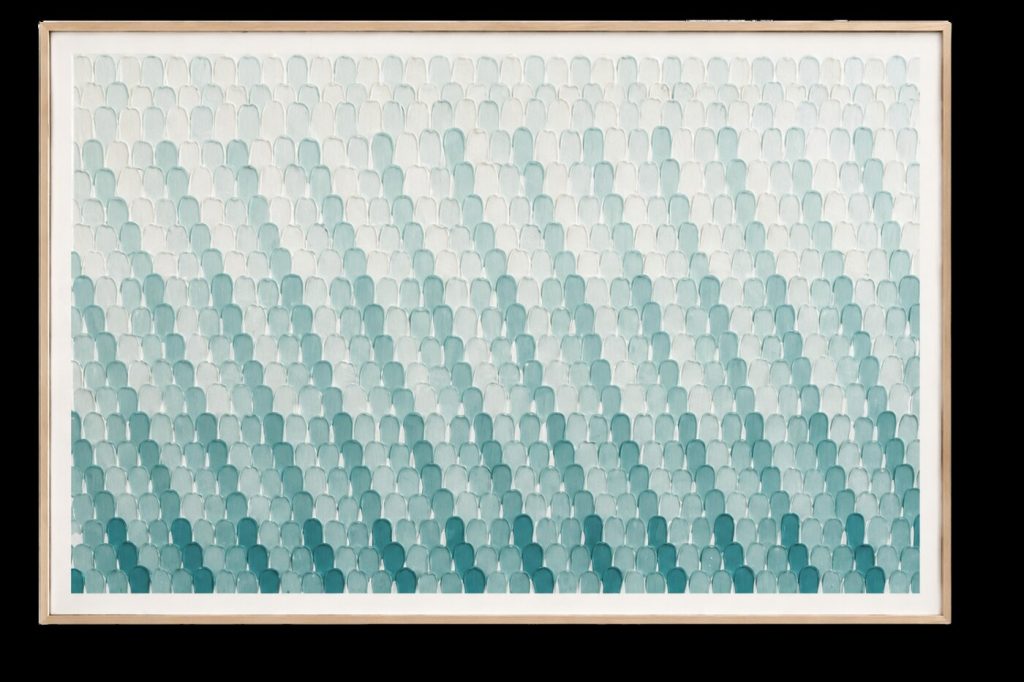 Equilibrio en Pétalos120 × 80 cmPaint and texture on canvasPrice on requestAsk about this piece →
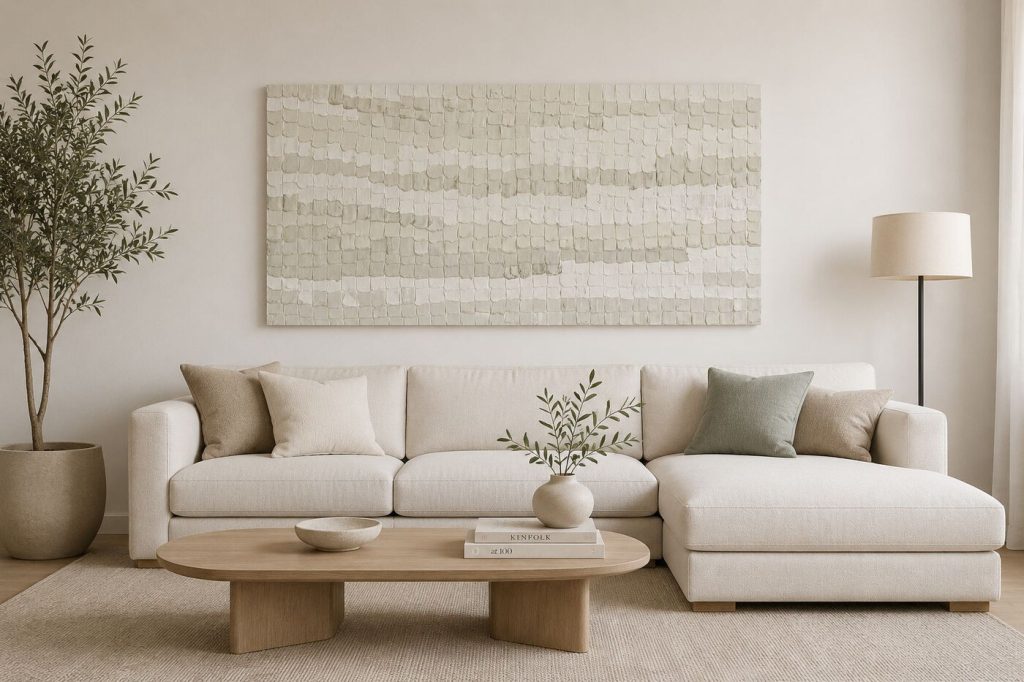 Materia Serena140 × 70 cmPaint and texture on canvasPrice on requestAsk about this piece →
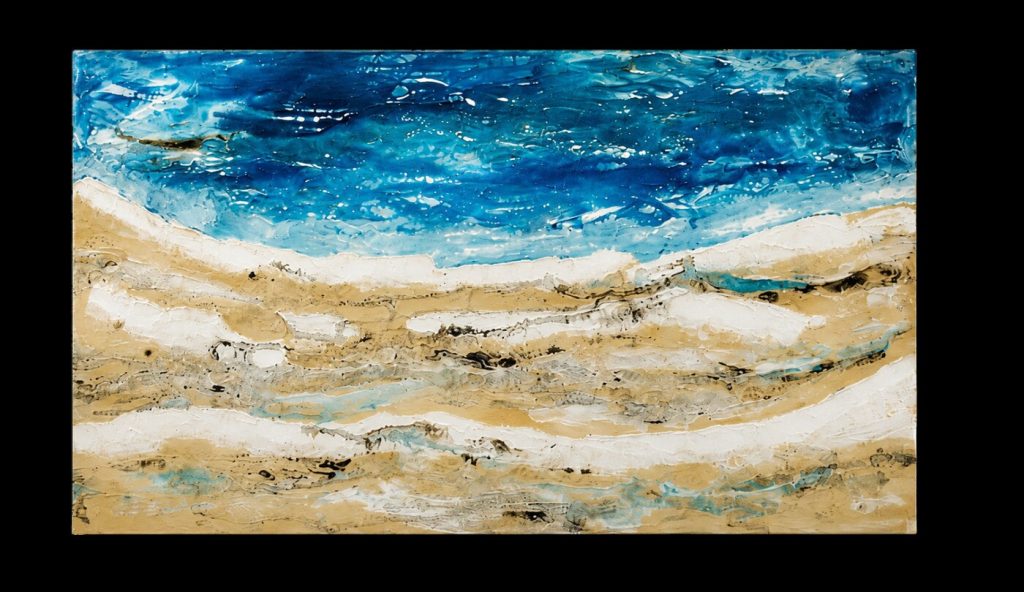 Límites130 × 75 cmPaint, texture and asphalt paint on canvasPrice on requestAsk about this piece →
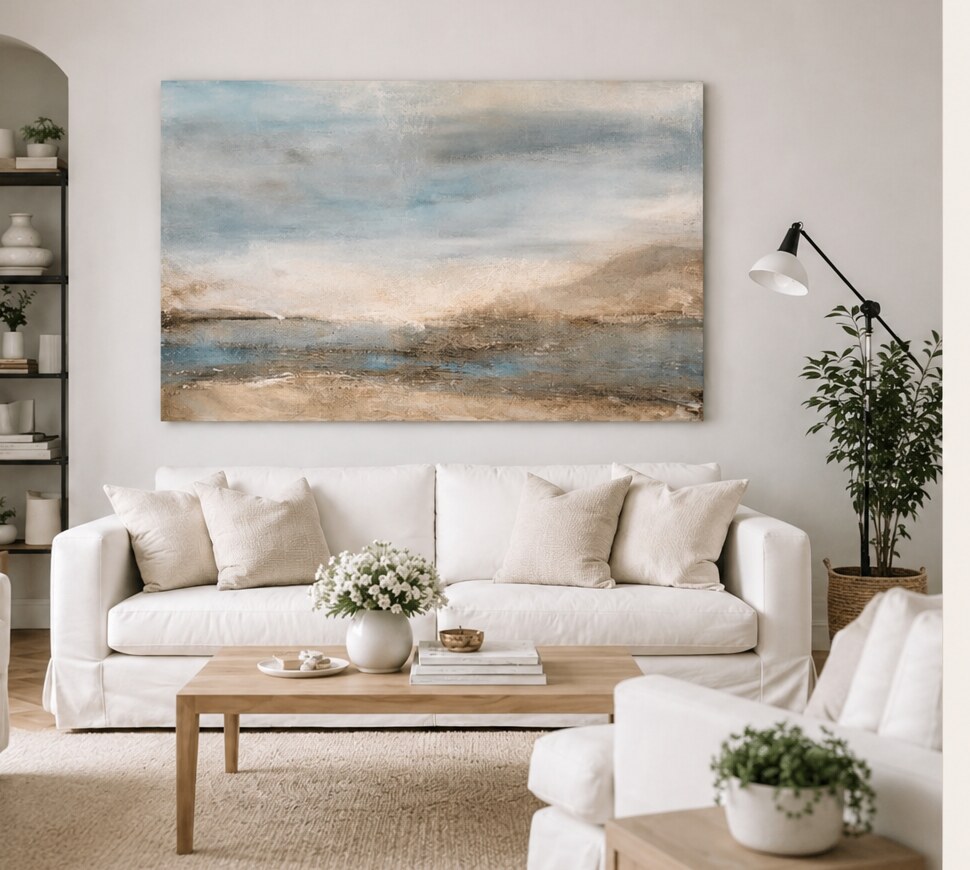 Horizonte en Calma120 × 90 cmAcrylic and textured matterPrice on requestAsk about this piece →
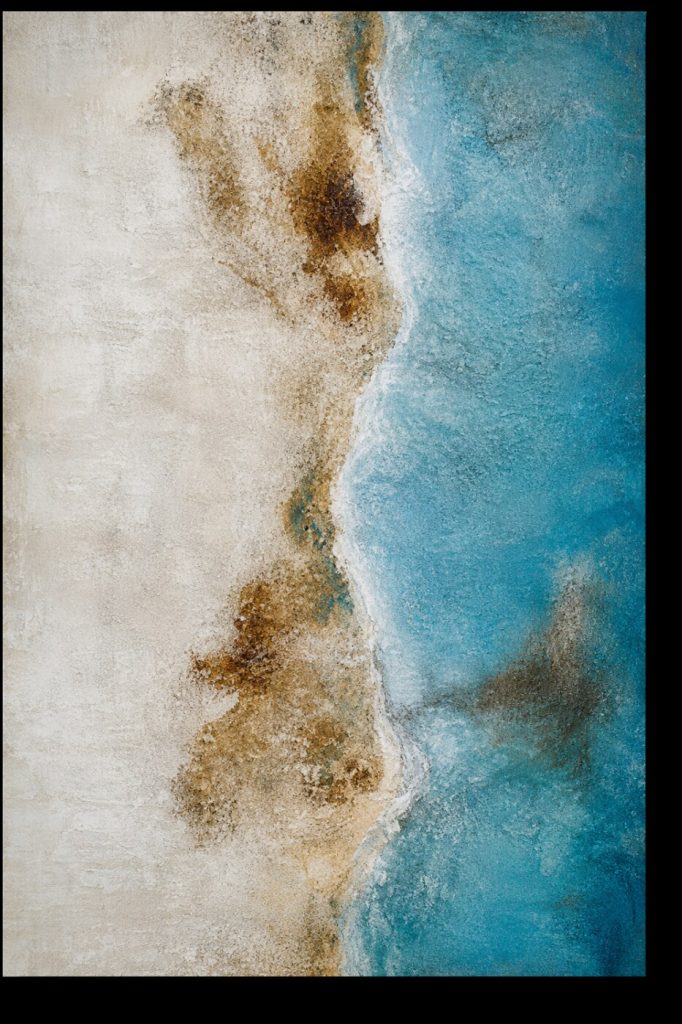 Límite Natural120 × 80 cmPaint, texture and asphalt paint on canvasPrice on requestAsk about this piece →
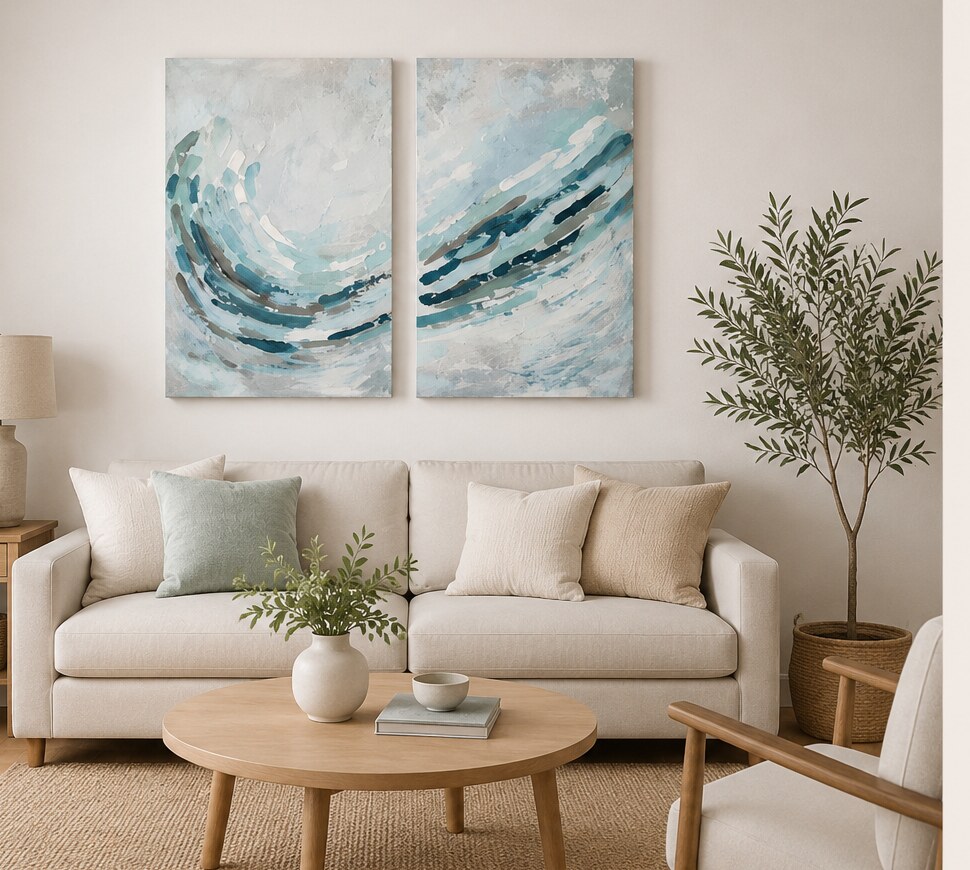 Equilibrio en MovimientoDiptych 50 × 70 cm eachPaint and texture on canvasPrice on requestAsk about this piece →
Living with a textured painting
An impasto piece wants a wall with side light. It is at home in Mediterranean, Japandi or wabi-sabi interiors, where linen, wood and lime plaster already speak of texture; see Japandi wall art, or white textured art for pieces where matter works almost without colour. In a large format the relief reads from across the room: Adriana regularly paints formats up to 2 metres wide, and larger on commission (more in large abstract paintings).
Every work is signed, comes with a certificate of authenticity and arrives stretched on a wooden stretcher, ready to hang. The paint and texture continue around the edges, so no frame is needed. If you are weighing up what makes an original different, read the guide to original abstract art.
Basic care
- Dust with a soft, dry brush, never a damp cloth.
- Keep it out of constant direct sun and away from high humidity, such as above a radiator or in a bathroom.
- Carry it by the stretcher, without pressing on the relief.
A textured original, planned for your wall
Texture is the hardest thing to imagine from a distance. So Adriana offers free personal advice: send a photo of your wall, she looks at the light, tones, furniture and scale, and prepares a realistic simulation on your own wall before you decide. If no piece fits, she can paint a commission in the size, palette and composition of your space. Everything can be handled in English by WhatsApp or email, with a personal reply within 24 hours and delivery across Spain with professional packaging.