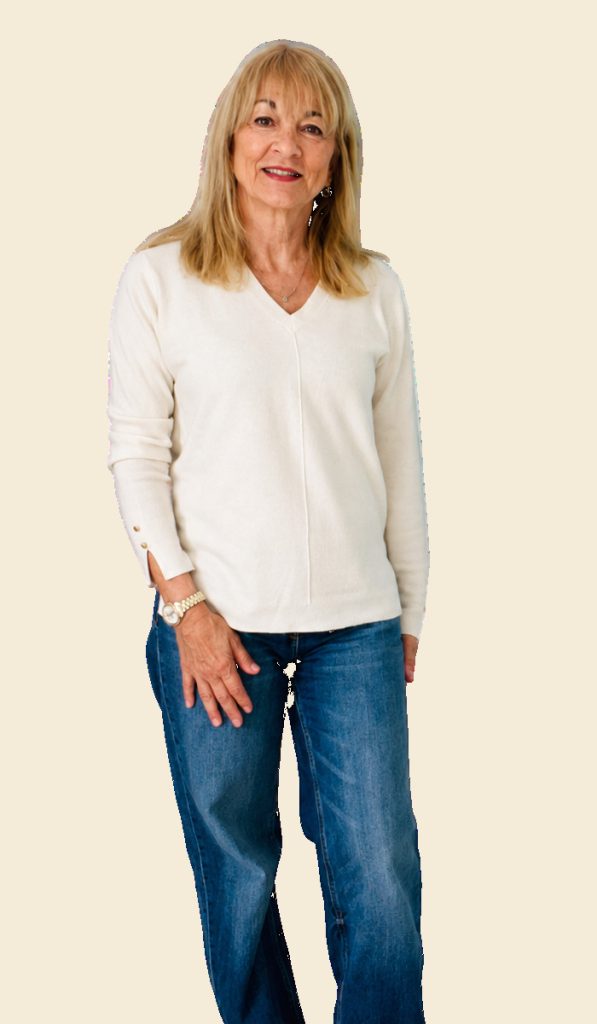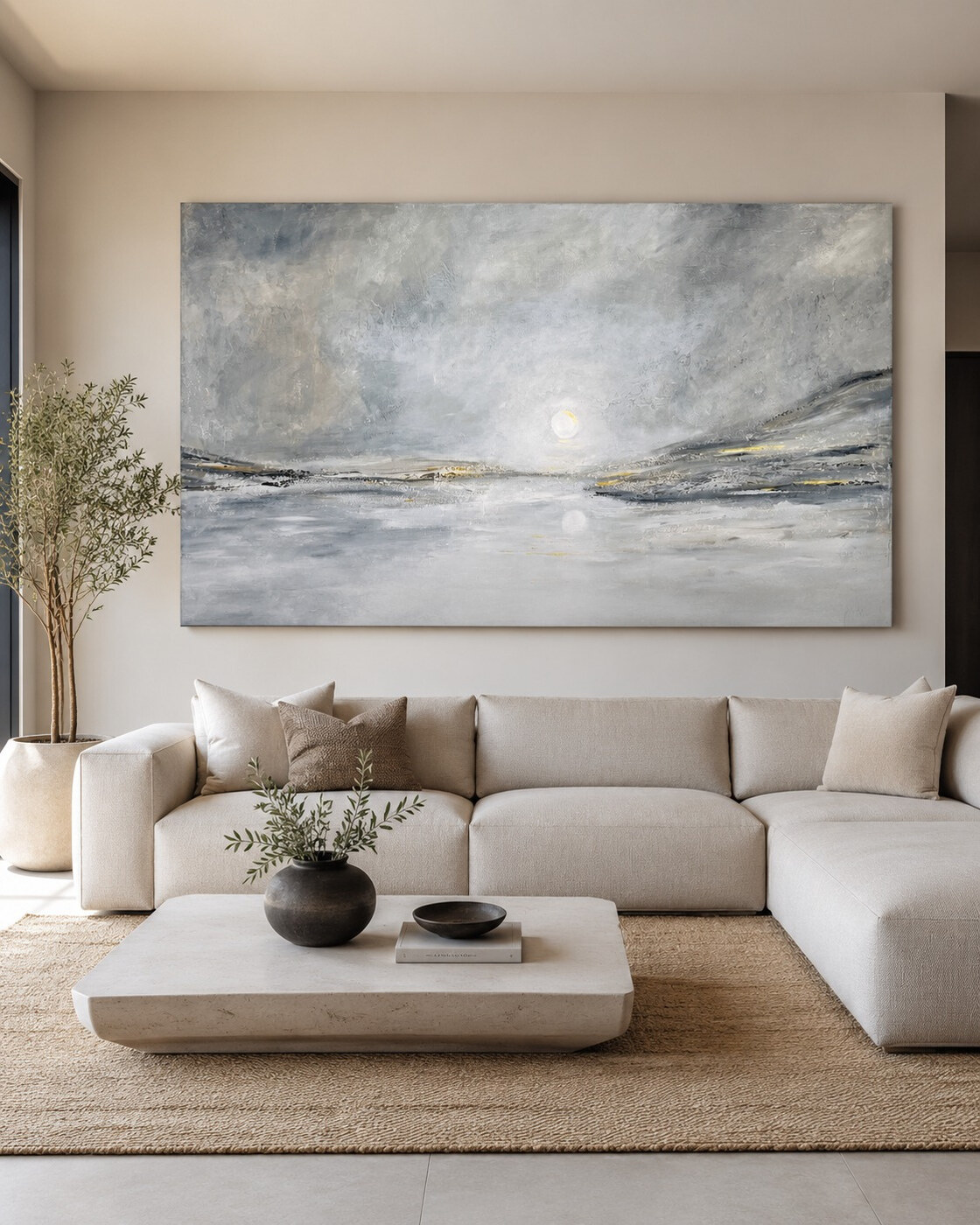
Original abstract art is the opposite of decor that arrives in a box by the thousand. It is one painting, made once, by an artist who signs it and stands behind it. Adriana Fernández paints hers in her studio in Ibiza town: acrylic, textured matter, relief and asphalt paint on canvas, in a language of calm drawn from the Mediterranean. This page explains what makes a piece genuinely original, where her work sits in the long story of abstraction, and how to choose the right abstract painting for a home in Spain.
What makes abstract art original
An original abstract painting is not defined by its style, but by three facts. It is unique: there is no edition and no copy. It has an author: a named abstract artist who signs the work and answers for it. And it belongs to a body of work: each piece shares a visual language with the others, so you can recognise the hand behind it.
That third point is the one mass-produced wall art can never fake. Generic abstract decor is designed to fit anywhere and say nothing in particular. An original artwork carries a way of building colour, texture and space that is the artist’s own. Look at two pieces from Adriana’s Mediterranean Collection 2026 side by side and you see the same search, whether one is a still horizon and the other a vertical diptych about moving water.
- Signed by the artist, every single work.
- Certificate of authenticity with each piece.
- Ready to hang: stretched on a wooden stretcher, with paint and texture continuing around the edges, so no frame is needed.
- Painted in 2026: all 13 pieces in the current collection.
This can’t be printed
A photograph flattens everything that matters in a textured canvas. In person, layers of paint and matter catch raking light from a window, cast small shadows in the morning and soften in the evening. The painting changes through the day; a reproduction stays the same. More on that in textured paintings with real relief and in our guide to matter painting. It is also why the cost of an original painting follows different logic from decor.
A short history of abstract painting
Knowing where abstraction comes from helps you see what you are buying. Abstract art is non-representational: it does not depict a figure, a house or a boat, but works with colour, form, rhythm and surface. It is a deliberate language, not a random one.
The pioneers: Kandinsky, Malevich and Mondrian
Wassily Kandinsky is often called the father of abstract art. In the early 1910s he argued that colour and form could move us the way music does, without describing anything. Around the same time in Sweden, Hilma af Klint was painting abstract works that stayed almost unseen for decades; today she is recognised as a key female abstract pioneer. In 1915 Kazimir Malevich showed his Black Square in Russia, the purest statement of non-objective art. In the Netherlands, Piet Mondrian and the De Stijl movement reduced painting to horizontal and vertical lines and primary colours, a style he called neo-plasticism. In Paris, Robert Delaunay built abstraction from circles of pure colour.
Geometric abstraction and Ben Nicholson’s reliefs
Between the wars, geometric abstraction spread across Europe, with constructivist ideas from artists such as Naum Gabo. In Britain, Ben Nicholson carved his white reliefs in the 1930s: abstract paintings in which the surface itself, raised and cut, became the subject. It is an early reminder that relief and texture have long been part of modern art, not a decorative add-on.
Abstract expressionism and colour field painting
In the second half of the 20th century, the centre of the art world moved to New York. The New York School gave us American abstract expressionism: the gestural energy of Jackson Pollock and Willem de Kooning, and the vast colour field canvases of Mark Rothko and Helen Frankenthaler, alongside Robert Motherwell. Much of that history is oil on canvas; later generations turned to acrylic painting, which dries faster and allows thick, layered surfaces. Op art, minimalism and many contemporary abstract voices followed.
Where Adriana’s work sits
Her abstraction is organic rather than geometric, and calm rather than expressionist. Landscape, Mediterranean light, coastal erosion and silence become layers of colour and matter. If Mondrian looked for order in straight lines, she looks for it in the slow line where land meets sea.
Your villa is in Spain. Is your art?
Many homes in Ibiza, Mallorca or along the Costa del Sol end up with artworks that could hang in any city in the world. A piece painted on the island, from the Mediterranean itself, ties the house to its place. Sand, off-white, stone grey, sea blues and the dark accent of asphalt paint sit naturally with lime plaster, wood and linen. There is more on this in art for homes in Ibiza and, for calmer interiors, in Japandi wall art.
The collection of original abstract paintings
The Mediterranean Collection 2026 brings together 13 unique pieces on canvas, painted in acrylic with textured matter, relief and asphalt paint:
- Silencio de Horizonte (160×80 cm): textures with acrylic glazes and Mediterranean light.
- Materia Serena (140×70 cm): calm organic textures in neutral tones.
- Geografía del Alma (139×90 cm): where land meets sea.
- Límites and Horizontes (130×75 cm each), and Límite Natural (120×80 cm): paint, texture and asphalt paint.
- Equilibrio en Pétalos (120×80 cm): the erosion of the coast, turned into matter.
- Horizonte en Calma (120×90 cm): acrylic and matter.
- Costa de Ibiza and Profundidades (105×104 cm): two almost square formats.
- Equilibrio en Movimiento, a vertical diptych of two 50×70 cm panels inspired by the fluidity of water, and Equilibrio, a diptych of two 60×50 cm panels.
- Mareas Serenas: a set of 30×30 cm pieces in textured relief and acrylic.
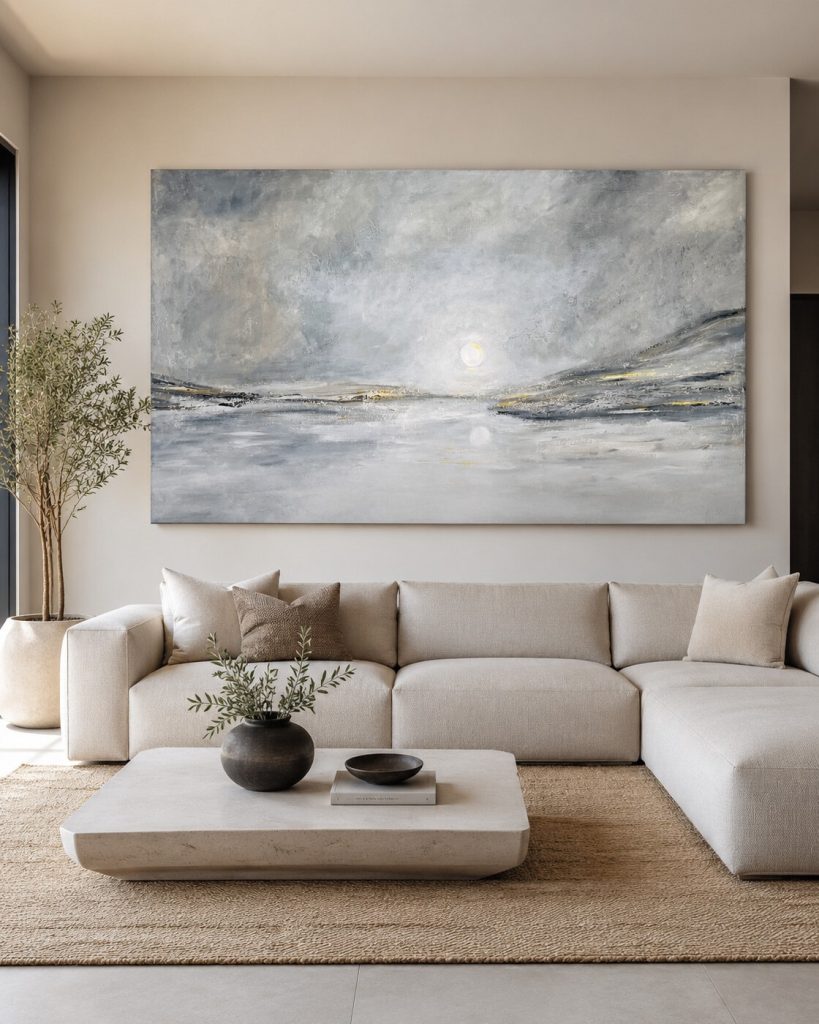 Silencio de Horizonte160 × 80 cmTextures with acrylic glazesPrice on requestAsk about this piece →
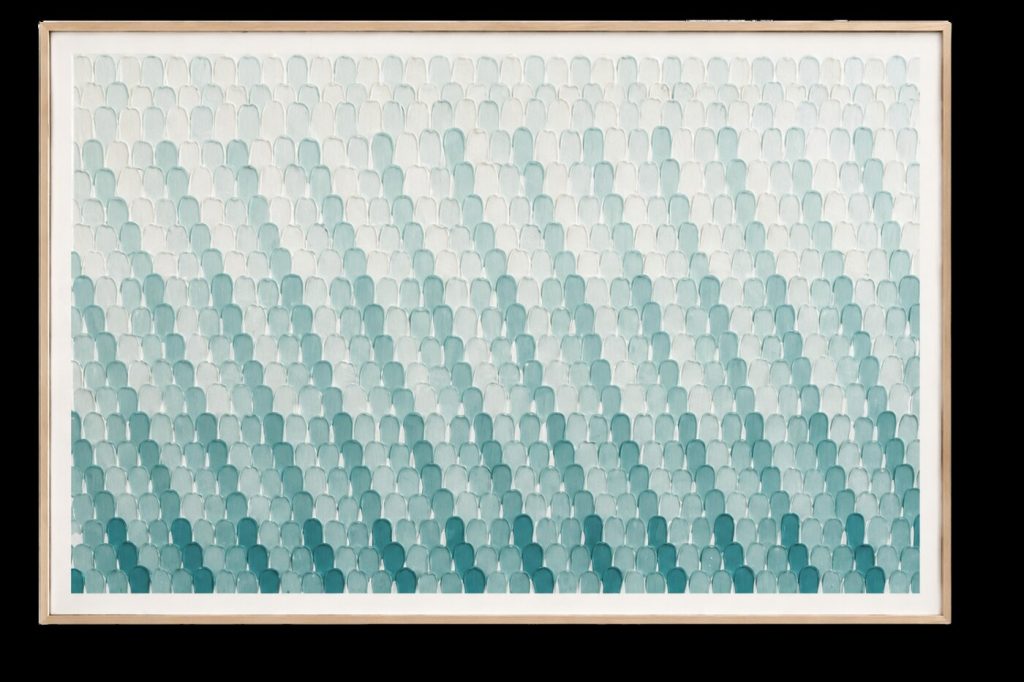 Equilibrio en Pétalos120 × 80 cmPaint and texture on canvasPrice on requestAsk about this piece →
 Materia Serena140 × 70 cmPaint and texture on canvasPrice on requestAsk about this piece →
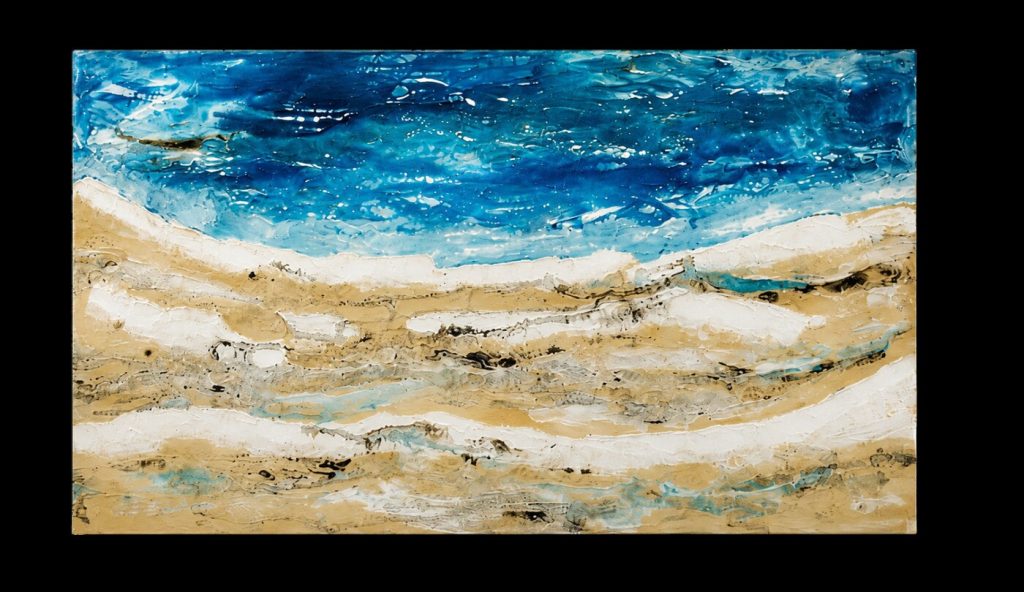 Límites130 × 75 cmPaint, texture and asphalt paint on canvasPrice on requestAsk about this piece →
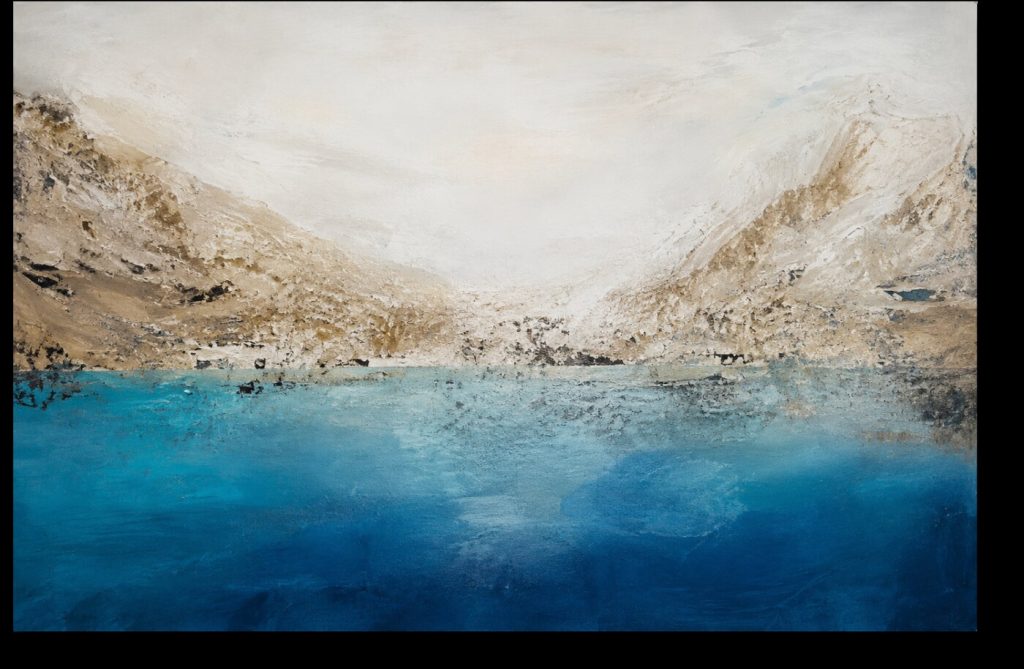 Horizontes130 × 75 cmPaint, texture and asphalt paint on canvasPrice on requestAsk about this piece →
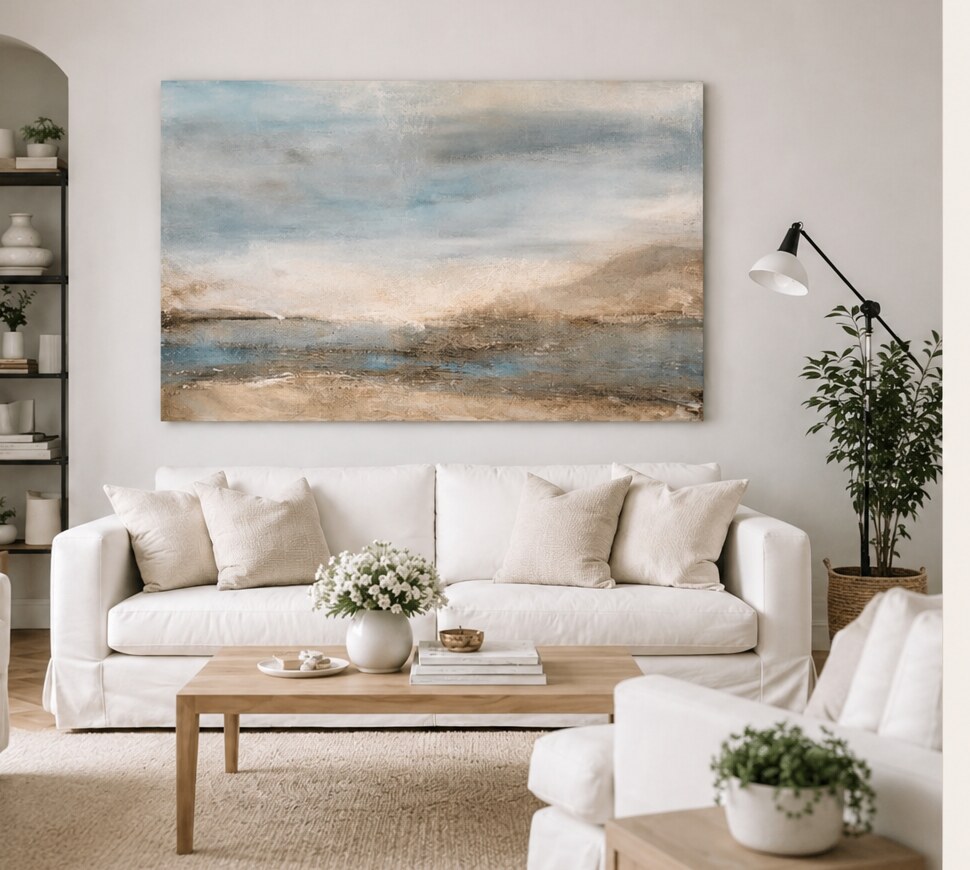 Horizonte en Calma120 × 90 cmAcrylic and textured matterPrice on requestAsk about this piece →
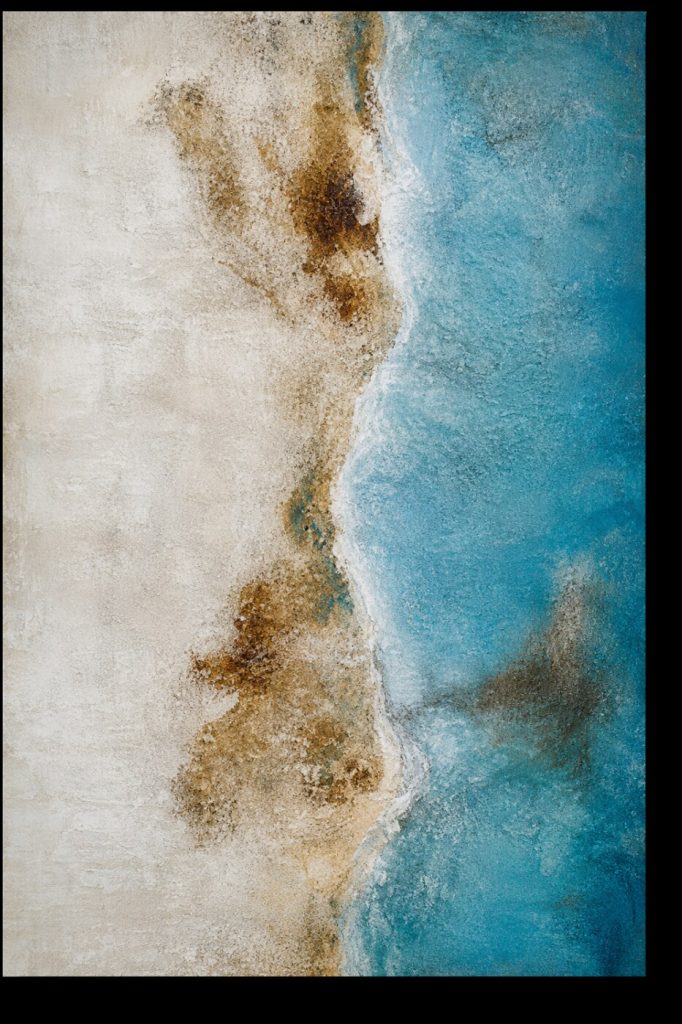 Límite Natural120 × 80 cmPaint, texture and asphalt paint on canvasPrice on requestAsk about this piece →
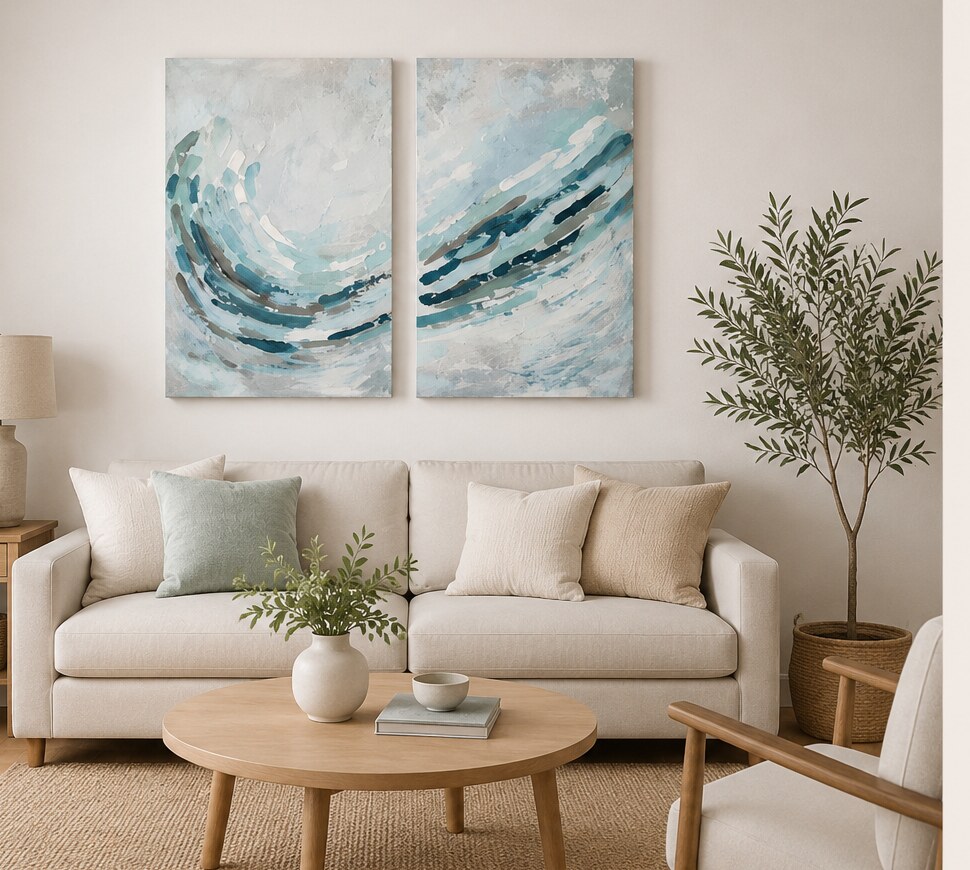 Equilibrio en MovimientoDiptych 50 × 70 cm eachPaint and texture on canvasPrice on requestAsk about this piece →
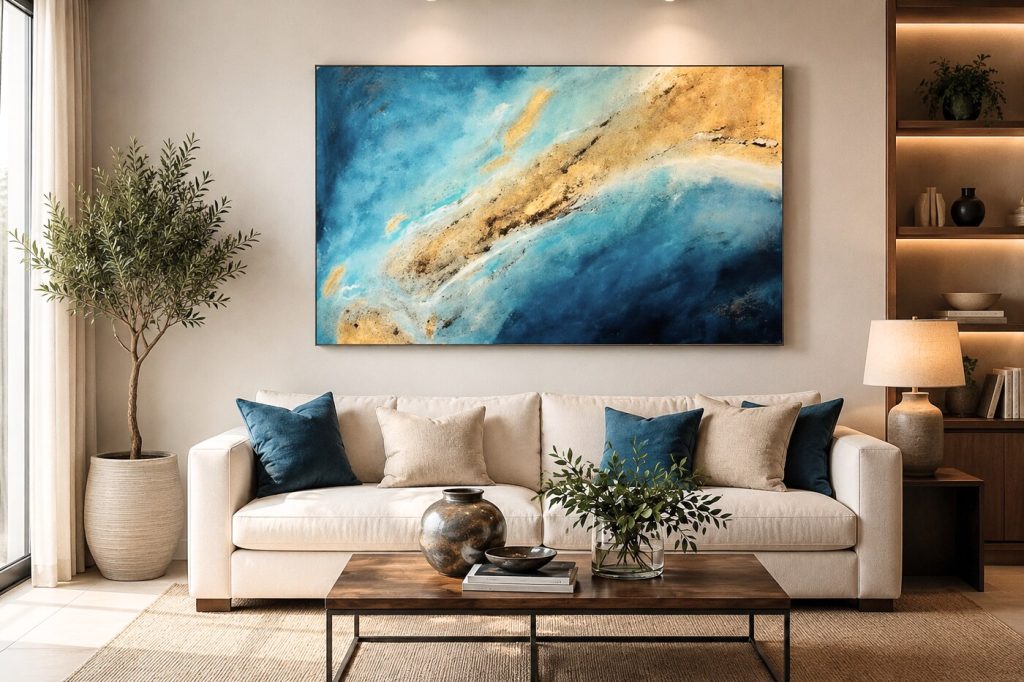 Geografía del Alma139 × 90 cmTextured paint on canvasPrice on requestAsk about this piece →
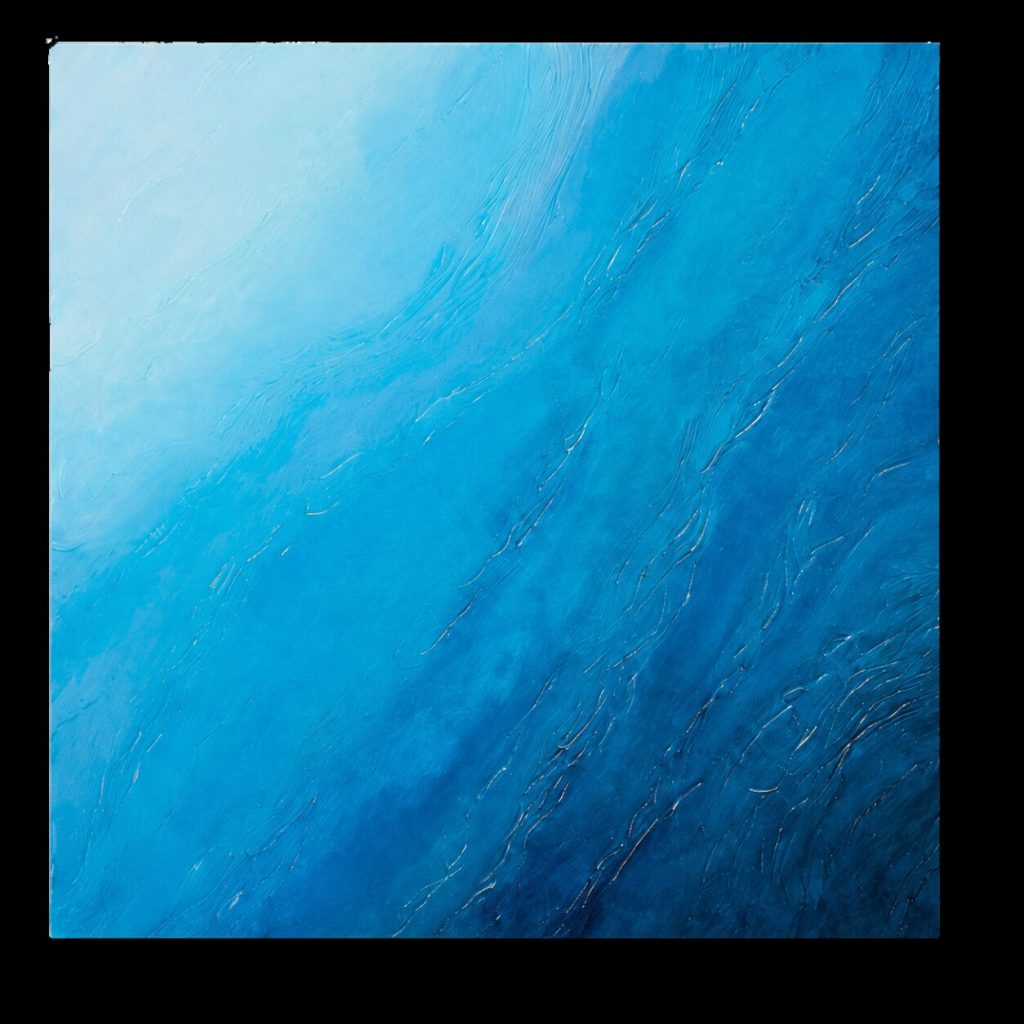 Costa de Ibiza105 × 104 cmPaint and textured matter on canvasPrice on requestAsk about this piece →
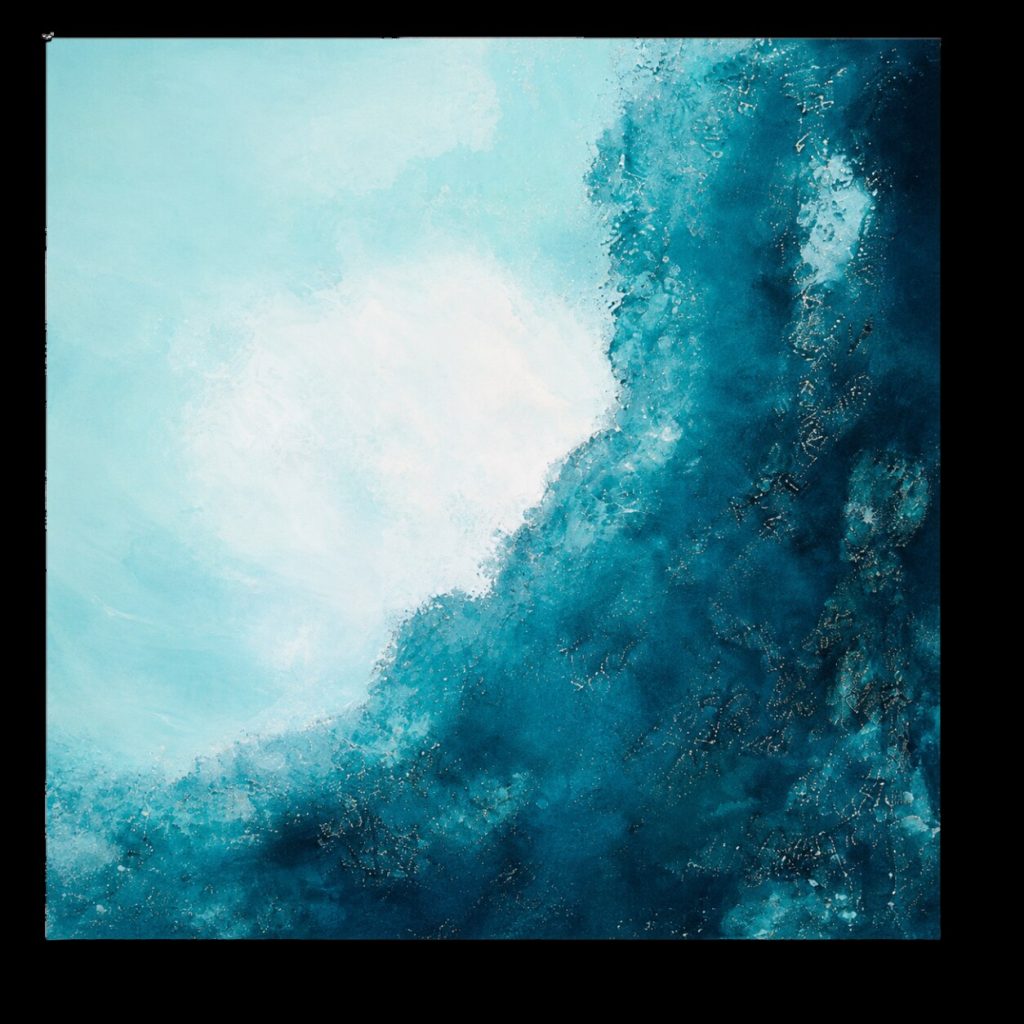 Profundidades105 × 104 cmPaint and textured matter on canvasPrice on requestAsk about this piece →
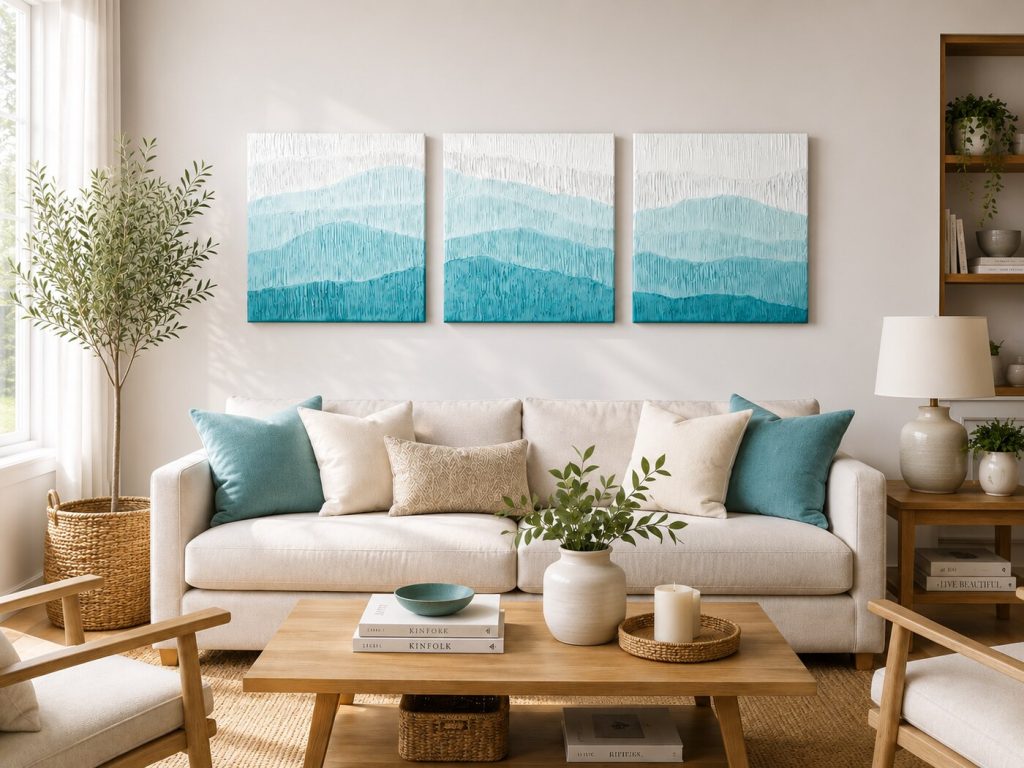 Mareas SerenasSet 30 × 30 cmTextured relief and acrylic on canvasPrice on requestAsk about this piece →
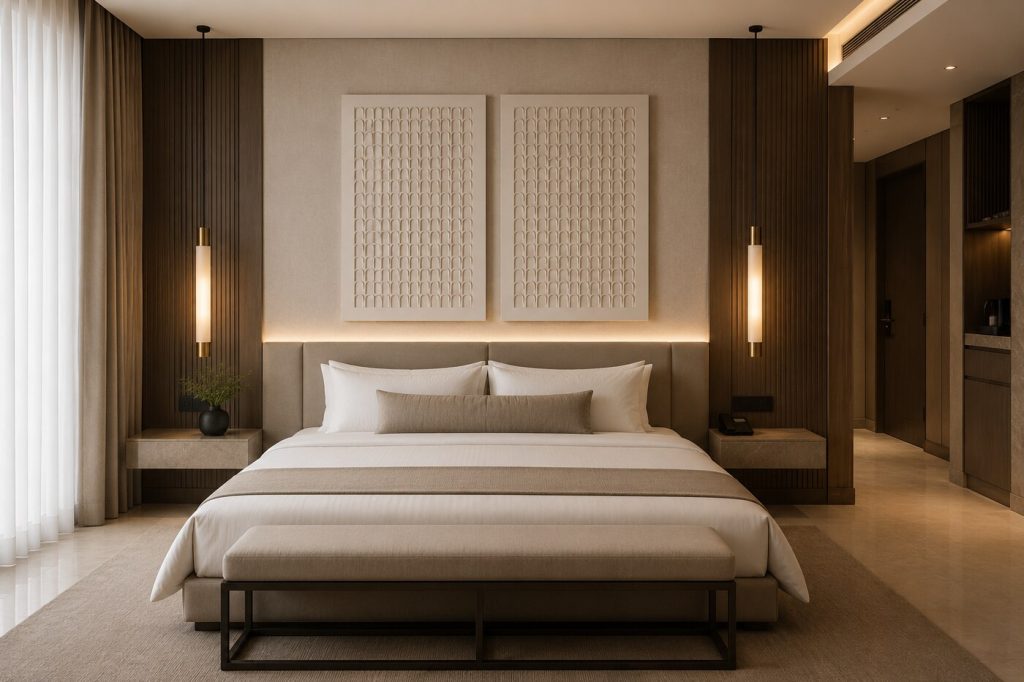 EquilibrioDiptych 60 × 50 cm eachTextured paint on canvasPrice on requestAsk about this piece →
For bigger walls, see the large abstract paintings; for pieces that echo the water, the sea paintings.
How to choose an original abstract painting
Start with the mood, not the movement
Geometric abstraction feels architectural and precise; gestural, expressionist work brings energy; organic abstraction brings calm. Ask what the room should feel like at the end of the day. For a bedroom or a quiet living room, a minimalist palette and soft texture usually win over a vibrant abstract full of contrast.
Scale: one piece with presence
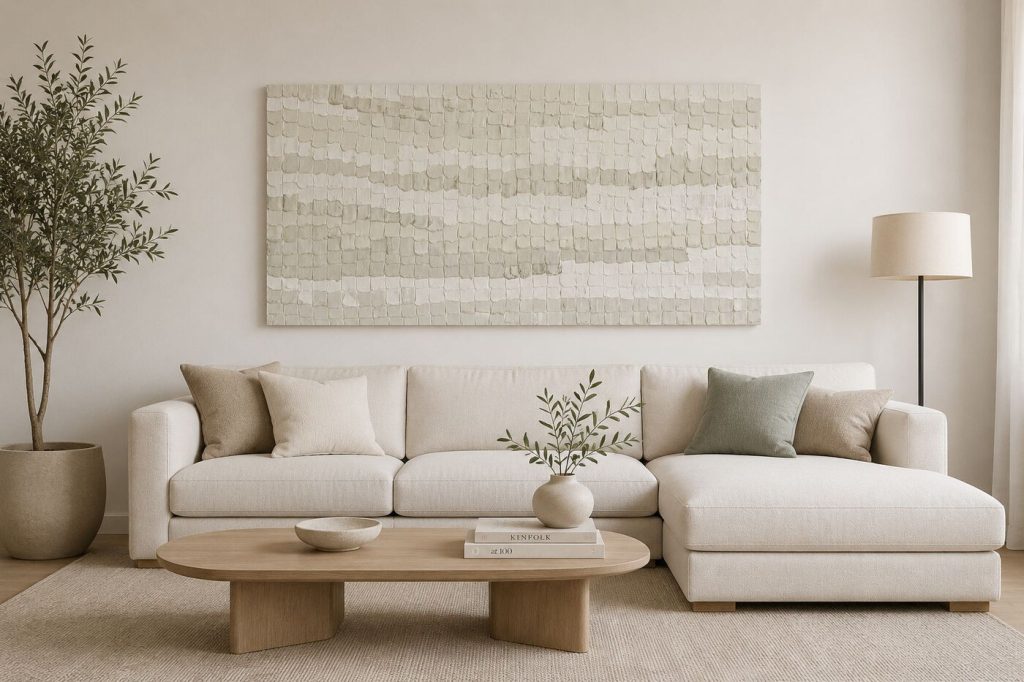
Above a sofa or sideboard, aim for roughly two-thirds of the furniture’s width; on an empty wall, about half of the free surface. One large abstract work almost always beats several small pictures. Adriana regularly paints formats up to 2 metres wide and, on commission, larger still.
Colour and light
Let the canvas talk to the room rather than match it: repeat one of its tones in cushions, a rug or the wood of a table. And think about where the light comes from, because side light is what brings textured matter to life.
Send me a photo of your wall
The surest way to choose is to see it first. You send a photo of your wall; Adriana looks at the light, the tones, the furniture and the scale, and replies personally within 24 hours, in English. Then she prepares a realistic simulation of the painting on your own wall. You can request your free wall simulation through the form.
If nothing in the collection fits, you can commission an original painting designed for your space: size, palette and composition, in the same language. You deal directly with the artist, with no middlemen; payment is by Bizum or bank transfer, and delivery covers all of Spain with professional packaging. If you are still comparing options, read how to buy original art in Spain.